
6 Best Fish Finders of 2026: Top Picks for Every Budget and Fishing Style
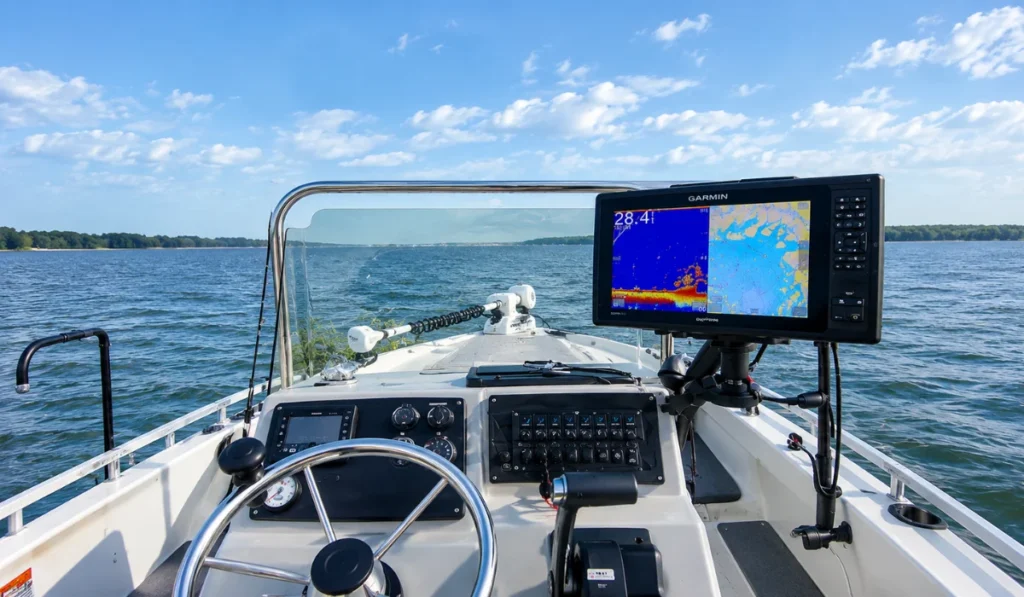
Are you looking for the best fish finder but not sure which one to buy? You are not alone; this is a problem with almost every angler, especially beginners. They don’t know which fish finder to select because today’s market offers 100+ varieties. Each promises better sonar, clear imaging, and advanced GPS features, making it difficult for anglers to choose the right one. For beginners with a low budget and limited experience, we highly recommend traditional sonar and mapping. By using it, they can catch plenty of fish easily and upgrade it later as experience and budget grow.
One of our team members, David, has great experience in fish finders and has been working with us for the last year. During our review process, he compared and assessed 17 top-rated fish finders and selected the 6 best-performing models.
If you’re also looking for a premium fly fishing rod for your next fishing trip, check out our guide to the top Fly fishing rods for anglers. We’ve compared popular options to help you find the right rod for your fishing style and budget.
List of the Best Fish Finders
Here’s a list of the top-rated fish finders. Choose the one that best suits your fishing style and budget.
The Best Fish Finders 2026: Expert Reviews & Recommendations
Best Overall Fish Finder
Garmin Echomap Ultra 2 Fishfinder
Key Features
Screen Size | 10 inches |
Vehicle Service Type | Boat |
Special Feature | Touchscreen |
Mounting Type | Panel Mount |
Operating System | Garmin OS |
Pros
Cons
Why We Chose It
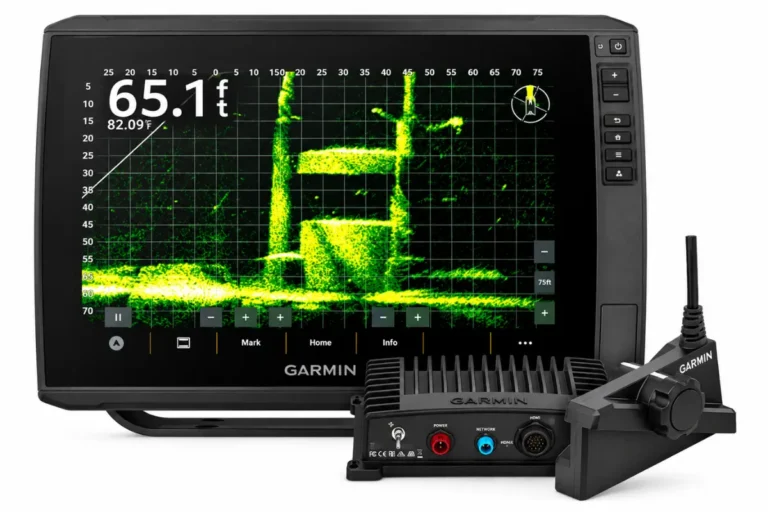
The latest version of Garmin Echomap Ultra 2 is highly upgraded compared to its old versions. Our team member David chose it because of its large display, easy-to-read touchscreen, and advanced sonar technology that helps anglers locate fish and underwater structures with confidence. The features that forced Miller and david for chosing it are its precise and accurate GPS and wireless connectivity, which make navigation simple; its support for LiveScope sonar allows users to upgrade their fishing experience as their needs grow. If you want a decent fish finder for catching more fish in less time, then we highly recommend the Garmin Echomap Ultra 2 for you.
Best Portable Fish Finder
Garmin GPSMAP 943xsv 9 Chartplotter Fishfinder
Key Features
Screen Size | 9 inches |
Vehicle Service Type | Boat |
Special Feature | Anti Glare Screen |
Map Type | Coastal/Inland |
Connectivity Technology | Bluetooth |
Pros
Cons
Why We Chose It
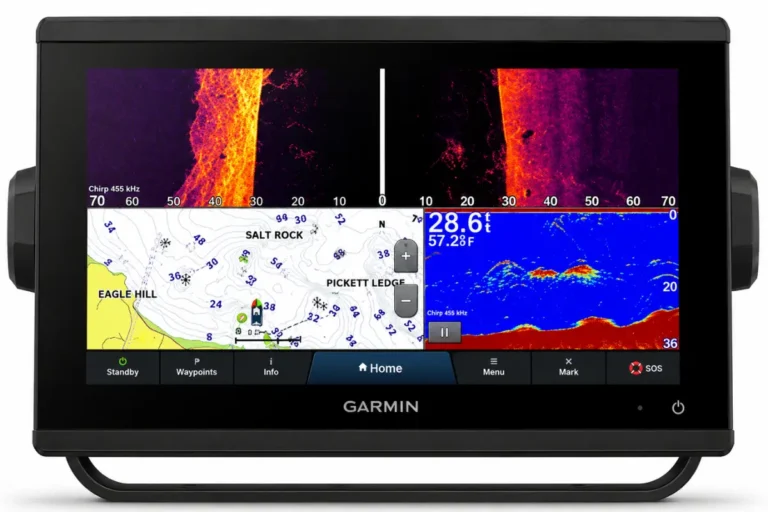
The Garmin GPSMAP 943xsv fish finder is an excellent balance between advanced technology and everyday usability. We compared it with other fish finders of the same type and analyzed each feature against them, but the Garmin GPSMAP 943xsv remained the standard choice because it offers many of the high-end capabilities found in Garmin’s flagship models while remaining compact enough to fit most helm layouts. These features make it a practical upgrade for a wide range of boats.
The Garmin GPSMAP 943xsv has a very smooth and responsive touchscreen interface compared to the older version of the Lowrance Elite fish finder. Its fine touchscreen feature helps us a lot while creating customized display layouts for viewing charts, sonar, engine data, and navigation exactly the way we prefer. We recommend Garmin GPSMAP 943xsv for most of our beginners because it doesn’t require any high-level expertise for its users, as its screen transitions are very smooth and its system provides a stable experience whether you are navigating unfamiliar waters or tracking fish.
One of the most handsome features of the GPSMAP 943xsv is its advanced networking support through NMEA 2000, which allows its users to integrate with compatible engine systems, autopilots, radar, and other Garmin marine electronics.
Best Mapping Fish Finder
Lowrance Elite FS Fishfinder
Key Features
Screen Size | 10 inches |
Power Source | Battery Powered |
Display Type | LCD |
Mounting Type | Bracket Mount, Surface Mount, Flush Mount |
Max Measuring Depth | 1000 feet |
Pros
Cons
Why We Chose It
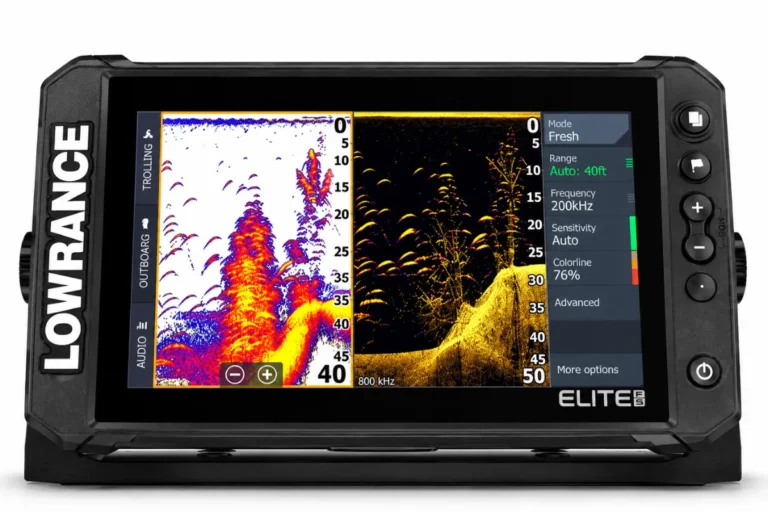
The Lowrance Elite FS 9 fish finder offers advanced fish-finding technology to help anglers spend less time searching and more time fishing. The high-resolution multi-touch screen system helps anglers to make the underwater environment visible in all lights. The Active Imaging 3-in-1 transducer combines CHIRP, SideScan, and DownScan imaging with FishReveal, provide anglers several ways to examine fish and underwater structure beautifully without any error.
The Profishingco founder, David, said that I chose it because of its great compatibility with ActiveTarget 2 XL live sonar. The networking capabilities of the Elite FS 9 allow it to work with other marine electronics and trolling motors. David also praised the clear display, detailed mapping, image quality, and the amount of information available on the screen. He used the sidescan for searching broad areas of fish and tested it in different locations, and found it to be one of the good fish finders; he said that it can be used across different fishing situations.
For beginners, the initial setup can be slightly tricky; it’s a great budget-friendly option for anglers who want high performance without spending a lot. Overall, we selected the Elite FS 9 for its detailed sonar, useful mapping, expandable live-sonar capability, responsive touchscreen, and strong versatility, which make it a best option for anglers who want more than a basic fish finder.
Best Side Imaging Fish Finder
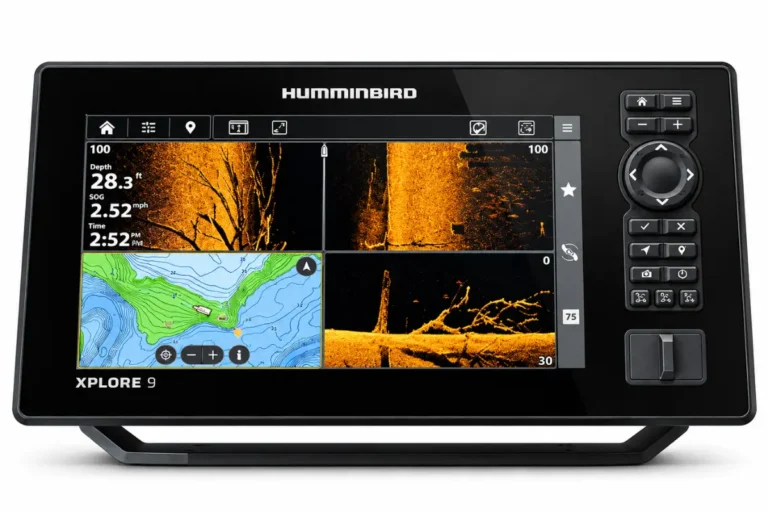
Humminbird XPLORE Series GPS Fish Finder
Key Features
Screen Size | 10 inches |
Power Source | Battery Powered |
Display Type | Color TFT |
Special Feature | Transducer included |
Max Measuring Depth | 200 feet |
Pros
Cons
Why We Chose It
During our testing process, the Humminbird XPLORE stood out as one of the top-performing fish finders because it combines a more modern touchscreen interface, crisp high-resolution display, advanced networking, and reliable navigation tools, which make it more refined than many previous Humminbird models we tested.
One of the biggest reasons we selected this unit is its simple display interface because the responsive touchscreen feature in it makes changing sonar views, adjusting frequencies, and customizing screen layouts feel almost effortless. Instead of spending time scrolling through complex menus like in other fish finders such as Garmin LiveScope live scanning sonar and Lowrance HDS Live in Humminbird XPLORE, you just need a few taps, which helps anglers stay focused on fishing rather than operating the electronics.
The Humminbird XPLORE fishing finder handled both shallow and deep river channel edges with great precision without losing signals, and the 10-inch screen remains sharp and easy to read even under strong sunlight, which makes it much easier for anglers to distinguish fish, underwater structure, and bottom details throughout the day. It also provides plenty of flexibility with great accuracy for anglers who like monitoring charts, sonar, and navigation simultaneously.
The full NMEA 2000 support feature in Humminbird XPLORE allows greater integration with compatible trolling motors, engine data, sensors, and other marine electronics, creating a more connected fishing setup that helps anglers save time and effort. Humminbird XPLORE is best suited for those anglers who want both ease of use and advanced capability without compromise.
Best Under $500 Fish Finder
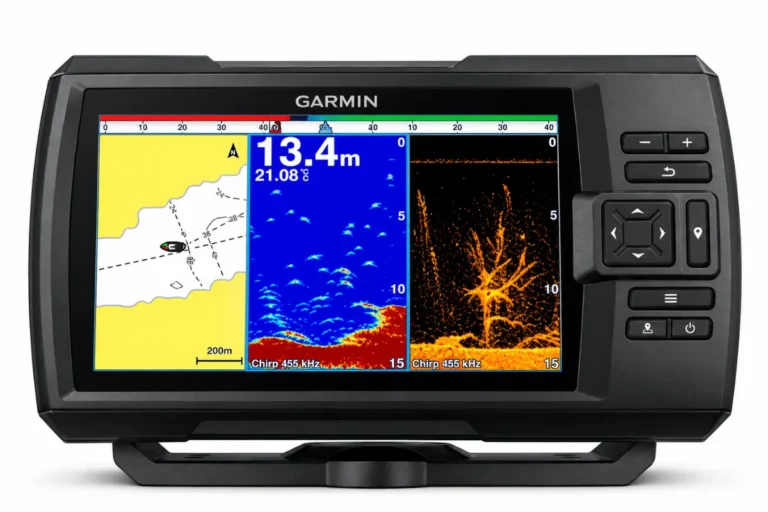
Garmin STRIKER Plus 7cv Fishfinder
Key Features
Screen Size | 7 inches |
Power Source | Battery Powered |
Display Type | LCD |
Item Weight | 5.24 pounds |
Mounting Type | Surface Mount |
Pros
Cons
Why We Chose It
The Garmin STRIKER Vivid 7cv fish finder is very famous for its strong combination of sonar performance, GPS functionality, and straightforward operation. The 7-inch colour display of the Garmin STRIKER provides a good amount of screen space for viewing sonar information, and the vivid colour palettes help in making fish and underwater structure easier to distinguish.
The most outstanding feature of the Garmin STRIKER Vivid 7cv, which makes it a top-rated fish finder, is its GT20 transducer because it provides you with both Garmin CHIRP traditional sonar and CHIRP ClearVü scanning sonar, allow you to switch between conventional fish-finding information and a more detailed view of what is beneath the boat. This feature of the Garmin STRIKER fish finder made it a practical choice for those anglers who want more than basic depth readings without spending on an expensive fish-finding system.
The Profishingco founder, David, said that the highly sensitive GPS feature forced me to choose it for my friends and juniors, and he said you can easily mark waypoints, track your position, monitor boat speed, and return to the productive fishing spots with great precision. While expressing his point of view, he said that the QuickDraw contours are another very useful feature that allows you to create and save your own maps 1-foot contours while fishing, which is very valuable when you are exploring waters where you want to build a more detailed picture of the bottom.
David noted that the only minor issue he found was that the STRIKER Vivid 7cv is not a conventional chartplotter with preloaded navigational charts, nor can it be upgraded with traditional map cards. Instead, its mapping capabilities rely primarily on GPS, waypoint marking, and Quickdraw Contours. For this reason, the Garmin STRIKER Vivid 7cv is best suited for anglers who primarily want reliable sonar, accurate GPS positioning, and the ability to create their own contour maps.
Best For Forward & Down Views
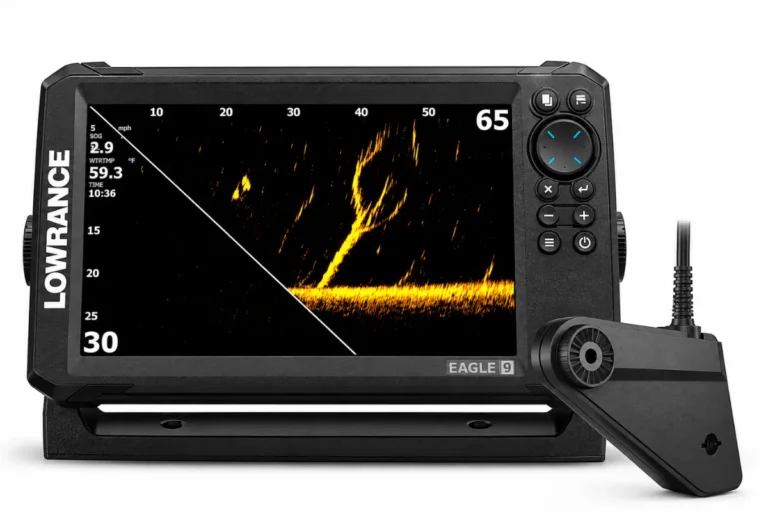
Lowrance Eagle Eye Fishfinder with Live Sonar
Key Features
Screen Size | 9 inches |
Power Source | Battery Powered |
Display Type | LCD |
Max Measuring Depth | 500 feet |
Mounting Type | Panel Mount, Bracket Mount |
Pros
Cons
Why We Chose It
Among all the Lowrance brands we tested, the Eagle Eye 9 fish finder stood out as a standard one because of its live-sonar capability, which brings it into a more accessible all-in-one fish finder; you do not need separate components and complexity as found in many premium systems. The forward and down live views feature in it allows you to monitor fish activity and watch how fish respond to a lure. This feature makes it very useful for anglers who want more real-time information than traditional sonar can provide.
The sonar system in it is very flexible it allows you to view fish and underwater structure in multiple ways by using just a single transducer. Instead of relying on a single view, like in the case of traditional 2D CHIRP and Down-Imaging sonars, it offers 4 distinct perspectives, i.e., live forward, live down, standard traditional sonar, and detailed down-scan imaging with clear fish overlays.
Most of the beginners like it very much because its system features an automatic tuning mode that adjusts the settings on its own. The 9-inch screen gives plenty of space to clearly watch moving fish and underwater structure. The upgraded daylight visibility is another very attractive feature that makes it a gold standard for anglers who need to read the display in bright conditions.
Versatility-wise, the Eagle Eye 9 fishfinder is best if compare with the same brands, and it works well in different fishing situations without any problem. Also, the Lowrance Eagle Eye 9 is relatively lightweight and requires low power, which makes it easy to use for boat, kayak, or ice fishing. It is a budget-friendly unit; remember you cannot compare it with the top-tier, expensive live sonar like Garmin LiveScope; it performs best in shallow water and at shorter distances.
Overall, the features that make the Eagle Eye 9 earn its place on our list are its live forward and down sonar, four sonar modes, autotuning, detailed mapping, and a large 9-inch display in one relatively straightforward system.
How to Choose the Best Fish Finder
Almost every brand offers top-rated fish finders for their customers, so it becomes very difficult for anglers, especially beginners, to choose the right unit. Choosing the right fish finder doesn’t have to be complicated once you understand a few basics. Below, we have broken down all the important features to look at before you buy a good fish finder in a very simple way so you can pick a unit that actually matches how and where you fish.
1. Know Your Fishing Style
Before looking at the best finder specifications, first you need to think about your fishing setup. Whether you are running a small kayak on a pond or a bass boat on a big fish reservoir, or drilling holes in the ice in winter? The answer changes everything. A small kayak angler needs a compact and battery-friendly unit, while a bass boat angler needs a bigger, more powerful unit.
2. Sonar Types
Most of the beginners get stuck while selecting the sonar type, so let’s keep it simple.
Traditional (2D) Sonar: This sonar type sends sound waves straight down and shows the depth, bottom, underwater structure, and shape of the fish. It is the oldest type and works in two dimensions, but it still works well for casual fishing.
CHIRP Sonar: This type of sonar is an upgraded version of the traditional (2D) sonar. Instead of one frequency, it works through a range of frequencies, which helps in giving sharper details and better separation between fish, bait, and underwater structure. Most of the modern upgraded best fish finders now include CHIRP because of its better precision and accuracy.
Down Imaging: The down imaging sonar points a flat, sharp, narrow beam straight down near the boat and creates a photo-like picture of all the underwater structure beneath the boat. It works very well for identifying structures like rocks and even individual fish near the boat bottom.
Side Imaging: This type of modern sonar sends signals to the left and right of the boat, which helps anglers to scan a wide area without driving over it. This is especially helpful for anglers who need a quick search of the underwater structures around the boat.
Forward-Facing or Live Sonar: This type of sonar uses modern technology for fish finding, and it gives the details of what’s happening in real time, ahead or around the boat, and also it tells you how fish react to your lure. Nowadays, most of the experienced anglers use this sonar in their fish finders because of its extraordinary functionality and precision.
You don’t need to pick all of these. Choose the one that best suits your fishing style. If you want to know how fish react to your lure, you need to pick the Forward-Facing or Live Sonar.
3. Screen Size & Resolution
A screen size and resolution also play the most important role in fishing; a bigger or larger screen is not always better. What actually matters is fish finder resolution; it means how many pixels are packed in that screen. A smaller screen with high resolution can look sharper and clearer than a larger one with low resolution. With resolution, also look for how far the screen will be from your eyes. Like a unit with a small screen size mounted in front of your kayak can still be easy to read, while a screen mounted further away, like on the bow of a bigger boat, benefits from extra size.
if you fish in bright or direct sunlight then you need to pick a screen with strong anti glare coating or high brightness ratings because a dim screen becomes almost impossible to read at midday.
4. GPS and Mapping
Today, most of the top-rated fish finders come with pre-built-in GPS. This new feature in fish finders helps in marking productive fish spots, and it also tracks your speed. Many units come preloaded with lake maps, or they support downloadable chart cards for more detailed contour lines. If the aim is to fish in new lakes or rivers, then good mapping can save you days of guesswork.
5. Power and Battery Life
The fish finder power and battery life also play a crucial role in a successful fishing trip. Usually, fixed fish finders mounted on the boat run off the boat’s 12-volt battery system; that’s why you don’t need to worry about the battery as long as your unit’s battery is in good shape. But in the case of portable and castable units, you need a good rechargeable battery, and different top brands offer different types of batteries. If you aim to spend hours on the water or fishing in freezing temperatures, then you need to look for a unit with a solid battery rating because cold weather drains batteries faster than usual.
6. Portable vs. Fixed-Mount
Most experienced anglers use fixed-mount fish finders because they are permanently installed on a boat and offer better performance, larger screens, and more advanced features. On the other hand, portable and castable fish finders, in comparison to fixed-mount fish finders, are lightweight, easy to move between boats, and great for shore fishing or quick depth checks on a new pond or river. If you don’t have your own boat or you fish from different locations, then a portable unit is best for you, but if you have your own boat, then a fixed-mount system is best for you because it gives a clearer and more reliable picture.
7. Ease of Use
Today, most of the top-rated fish finders use modern touchscreens; others use physical buttons, and some offer both features. The modern touchscreen units are quick to navigate, but they can be harder to use with wet, cold hands or even with gloves on. On the other hand, button-supported units take a little longer to learn but work well in any condition. If you are new to fish finders, then pick a unit with a simple menu system so to spend less time on its system and more time fishing.
Things to Consider Before Buying the Best Fish Finder
Buying a fish finder is easy, but finding the right one is where most anglers, especially beginners, get stuck. If you look through any list of top-rated fish finders on the market, you’ll notice that almost every brand claims its models are the best. These claims can make it difficult to choose the right one. That’s why you should be careful before buying a fish finder to avoid wasting your money. Before adding anything to your cart, we recommend checking these key points. They’ll help you avoid buyer’s remorse and make sure you choose a decent fish finder that suits the way you actually fish, not just one that looks good out of the box.
1. Boat Type & Space
Before buying a fish finder, first think where and how you’ll mount the unit. If you have a small boat or kayak with limited console space, a compact 5-inch unit may be a better choice than a bulky 9-inch display. On the other hand, if you have a bigger boat which have a dedicated dash or electronics panel for units, then a bigger 9-inch or larger display can make more sense.
2. Purpose of use
When choosing a fish finder, first you need to answer this question: For what purpose do you actually need this fish finder to do? Someone who fishes casually on weekends only needs a basic, simple setup to enjoy a day on the water, and on the other hand, an experienced angler needs a good fish finder with advanced features like GPS mapping and a high-tech system to search every possible underwater structure and edges of water.
3. Sonar Coverage
Today, most of the modern fish finders offer different types of advanced sonar, but you only need to pay attention to the one that exactly matches how and where you fish. Basic CHIRP sonar provides standard depth and fish readings, which make it an affordable and ideal choice for everyday fishing. But if you want a clearer underwater view, then Down Imaging shows sharp, picture-like details of structures and fish directly beneath your boat. If you need a quick, wide left and right sides view of your boat to locate fish without floating right over them, then side imaging sonar is best. The last and most advanced option is the Forward-Facing Sonar, which shows live, real-time video of fish swimming ahead of your boat, though it comes at a very high price.
Don’t waste your money buying every feature available. Choose the specific sonar type that fits your budget and fishing style.
4. Power & Wiring
Before buying any fish finder, first make sure how it gets its power so you do not run out of battery while fishing. The fixed fish finders mounted on a boat are connected straight to the boat’s main battery system. In this case, you only need to make sure that the boat’s battery system is working well, because other devices are also connected to it at the same time. On the other hand, small portable or castable fish finders use their own pre-built rechargeable batteries; in this case, anglers need to pay attention to the rechargeable battery quality and also how long it will last and how fast it will be recharged.
5. Portability & Storage
How and where you fish determines whether you need a portable or permanently installed decent fish finder as well as how to protect it. As you know, fixed units are installed permanently onto a boat. However if you switch between different boats and fish in different locations then a portable fish finder is much more better choice because you can easily pack it up and move it with sonar type you also need to keep it in safe place when you are not on the water because leaving the display screen mounted on your boat all the year will damage it over time due to direct sun exposure and extreme hot or cold tempratures.
Why Do You Need a Fish Finder?
Most bad fishing days aren’t due to an angler’s bad luck but happen because of wasting time and effort fishing where there are no fish located. As you know, fish do not spread out across a lake; instead, they gather around specific underwater structures, depths, or comfortable water temperature zones. A good fish finder shows you exactly where the underwater structures and fish are located. This advanced approach helps anglers save their time and effort and focus them on targeting fish-rich spots instead of casting blindly into empty water.
1. Saves Time on the Water
Instead of spending hours blindly on the water without any fruitful result, you can check all these spots in seconds and move on if it is empty. This is exactly why most of the anglers use the best fish finders for their fishing trips.
2. Keeps You Safe
Without a fishfinder, anglers don’t know exactly the water depth, whether it is shallow or deep, but depth-reading devices warn you before you hit any harmful structure like shallow flats or sudden ledges. That’s why using the right water depth reading tools keeps you safe while fishing on unfamiliar water.
3. Builds Confidence
Targeting specific fish-reach spots by using a fish finder helps anglers, especially beginners, build confidence, which keeps them energetic for the complete fishing season.
